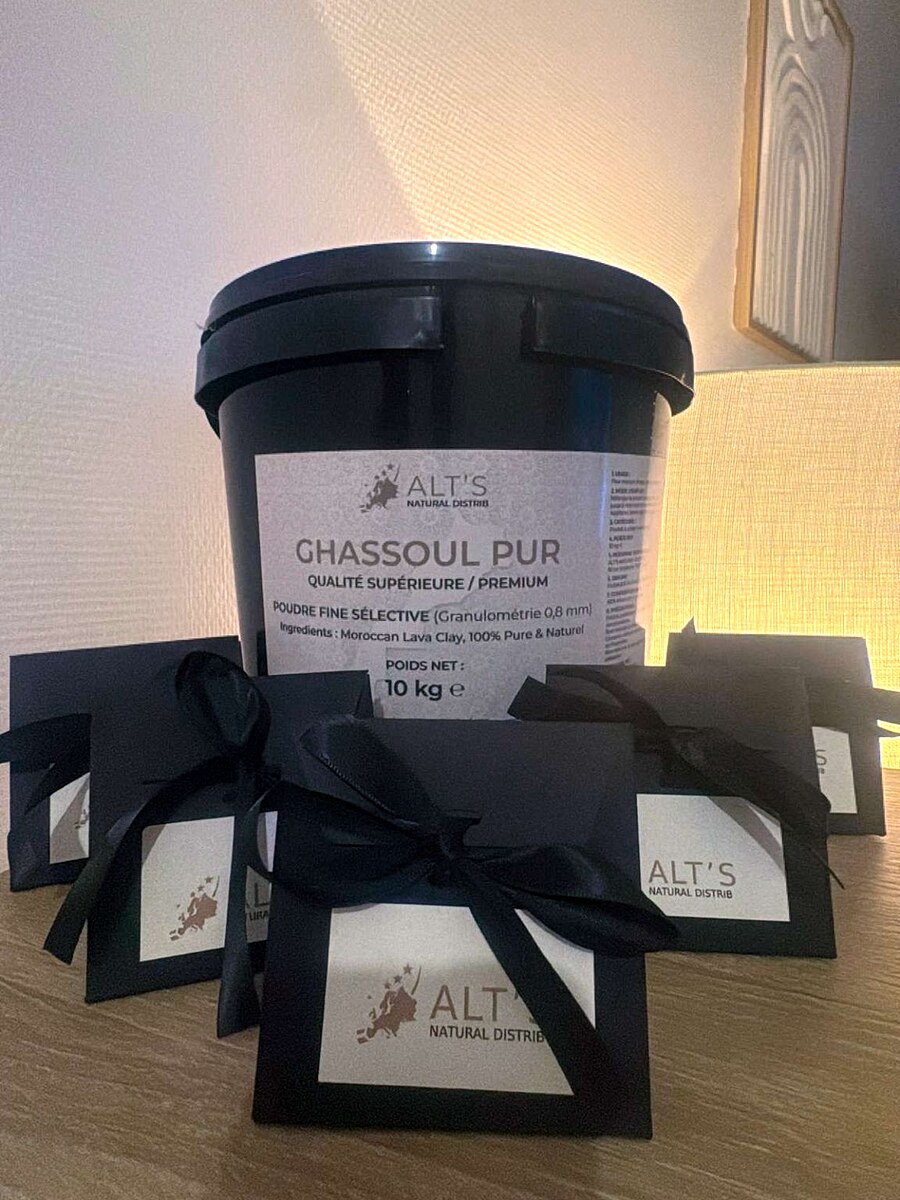
A dry cleanser can reduce shipped water, create a precise ritual and simplify the base formula. It also moves critical variables into dispensing and consumer activation: dust, dose, water quality, mixing and storage after opening.
Start with a powder architecture
Rhassoul may be the central mineral, but the blend still needs a designed flow, wetting profile and skin feel. Other powders can modify slip, oil uptake, density or foam; dry surfactants can create a different cleansing route; binders or granulation may reduce dust. Compatibility still matters in a dry blend, especially under humidity.
Define whether the product becomes a thin cleanser, a paste or a mask. The same powder can frustrate users if the dose and water instructions do not reliably reach the intended texture.
Treat the package as formulation equipment
A shaker, sachet, spooned jar and narrow-neck bottle produce different doses and dust clouds. Test dispensing with dry and damp hands, after transport vibration and after repeated bathroom exposure. Measure moisture ingress and caking, not just pack appearance.
Single-dose formats can control dose and hygiene; multi-use packs reduce packaging per use but demand better closure, instructions and contamination thinking. Avoid packs that invite users to add water directly into the primary container unless the product was designed and validated for it.
Write activation instructions that survive real life
- 01Dose
Give a visible or measurable amount—not “some powder”.
- 02Add water progressively
Specify the intended texture and avoid an uncontrolled splash.
- 03Use immediately
Do not encourage storage of a home-hydrated mixture unless validated.
- 04Keep the pack dry
Close promptly and protect the remaining powder from bathroom moisture.
Validation priorities
- Blend uniformity and segregation through transport
- Flow, dose repeatability, dust and inhalation exposure
- Moisture uptake, caking and closure performance
- Activation across realistic water ratios and qualities
- Application, rinse, residue and eye-area misuse
- Microbiological quality and an appropriate safety assessment
Your instructions and pack must make that final manufacturing step predictable.
Sources & technical context
- 01ALT’S Rhassoul technical sheet (2026)
- 02EU Cosmetics Regulation — foreseeable use and product safety
- 03Surface behaviour of Ghassoul in water, Heliyon (2020)
Waterless formats still require raw-material controls, finished-product safety work and an assessment of foreseeable inhalation, eye exposure and user-added water.