Natural raw materials ask buyers to manage variation, not pretend it does not exist. A robust Rhassoul qualification converts a first sample into acceptance criteria, a process window and a supply decision that quality, R&D and procurement can share.
Stage 1 — qualify the identity before the formula
Open with a document and sample review. Confirm commercial name, INCI, CAS, declared origin, supplier, packaging, storage and shelf-life position. Check what each analytical value represents: a typical value, a current batch result or a contractual limit are not interchangeable.
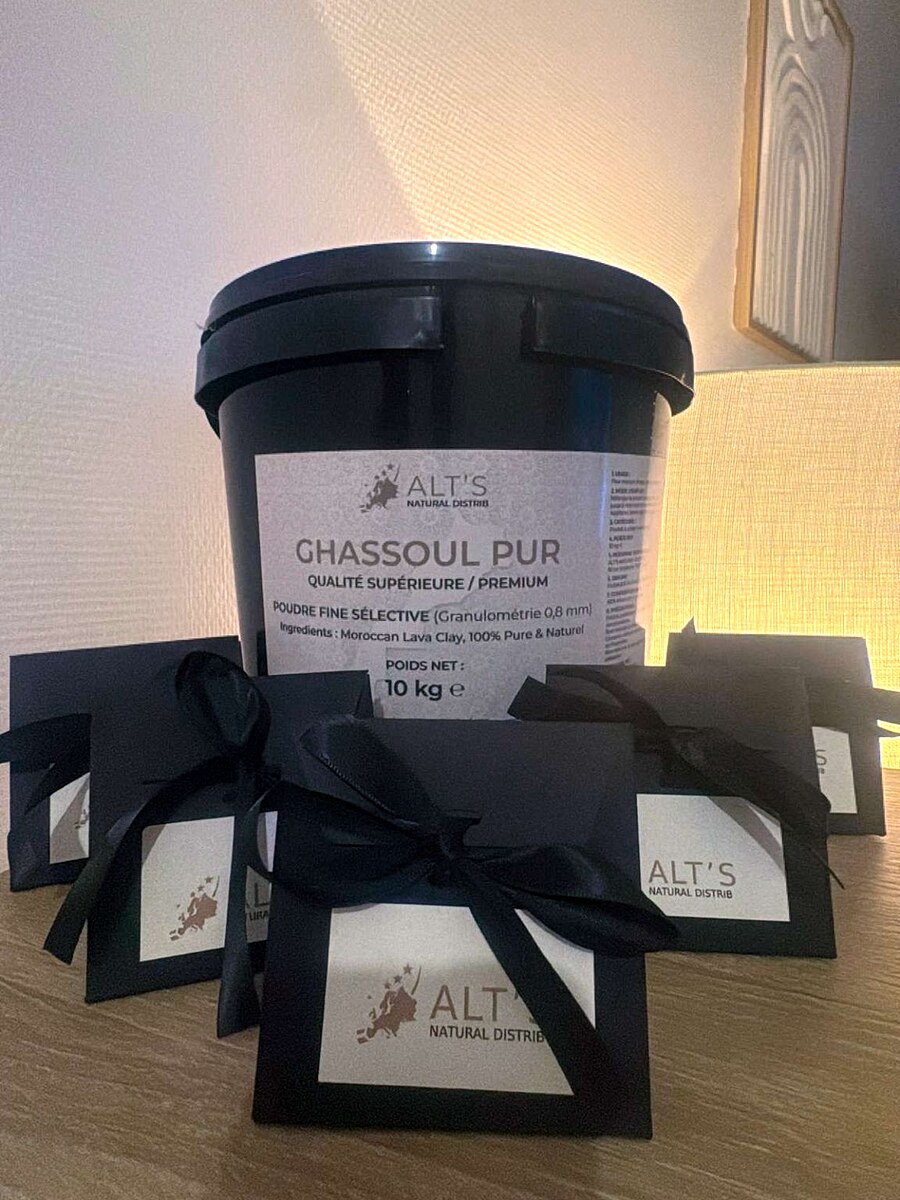
For ALT’S material, the source sheet identifies MOROCCAN LAVA CLAY, CAS 12417-86-6, Moroccan origin, a 10 kg professional pail, declared particle size and available microbiological and elemental-analysis context. Your internal approval should state which documents and limits are required for routine receipt.
Stage 2 — create a retained-sample fingerprint
Photograph the sample under controlled light and record colour range, odour, powder appearance, agglomerates and bulk behaviour. Add simple, reproducible internal methods where they matter: moisture, sieve residue, bulk density, hydration time or a standard paste viscosity. The method is as important as the number.
Keep a signed reference sample. Natural variation is easier to manage when future lots are compared with a defined range rather than a memory of “the brown powder we liked last year”.
Do not silently convert one certificate or marketing sheet into a permanent acceptance limit. Agree the specification and test method.
Stage 3 — prove the intended use
Build a small experimental matrix around use level, water ratio, order of addition and mixing energy. Compare at least one control. Capture processing observations as carefully as sensory ones: dust, wet-out, lumps, vessel wall build-up, transfer loss and clean-down can determine industrial viability.
Then run the finished-product programme appropriate to the format: stability, pack compatibility, microbiological quality and preservation where relevant, safety assessment and claim substantiation. A raw-material registration or supplier statement does not replace the obligations attached to the finished cosmetic.
Stage 4 — move to pilot without losing the learning
Translate beaker instructions into scale-independent parameters: addition rate per mass, tip speed or power per volume where appropriate, temperature window, mixing time and hold time. Define the point at which the clay enters the batch and which ingredients must be present—or absent—at that moment.
Close qualification with an approved specification, incoming-control plan, retained-sample policy, change-notification expectation and named escalation contacts. Procurement can then discuss volume against a material the laboratory has actually approved.
- Sample and technical file reviewed
- Finished-product trial passed
- Acceptance criteria and methods agreed
- Pilot process captured
- Supply and change-control route approved
Sources & technical context
- 01ALT’S Rhassoul technical sheet (2026)
- 02EU Cosmetics Regulation — safety, responsible person and product information
- 03Surface and mineral context for natural Moroccan Ghassoul, Heliyon (2020)
This framework supports supplier and formulation qualification. It does not replace the buyer’s quality system, regulatory assessment or finished-product safety report.